
When you source valve handles from a Chinese hardware factory, the two questions that decide whether your order runs smoothly are always the same: do the dimensions match your drawing, and will the cargo reach the port on time? At Qingdao ShengChenXiang Hardware Products Co., Ltd., both questions are answered on the shop floor before a single carton leaves the building. In this article we take you through a real production batch — from the custom inspection gauges at our workbenches to the red J6L truck already loaded and sealed for Qingdao Port.
A valve handle looks like a simple stamped or welded part, but in real service it has to mate with a valve stem, sit flush against a bonnet, and survive hundreds of thousands of operating cycles without loosening. A handle that is 0.5 mm too short, or whose hole angle is off by one degree, will come back as a field complaint weeks after the container is on the water. For that reason, every batch we run goes through a dedicated first-article dimensional verification before mass production is approved.
On the bench in front of our inspectors you will not only find calipers and height gauges — we also keep a set of custom check plates machined specifically for recurring valve handle models. The plates you see in the photos are engraved with a part number (for example 250424-01 and 40103-04), a calibrated zero mark, and reference slots that mirror the critical contours of the handle. An inspector lays the freshly formed handle against the plate, aligns the known edge to the zero mark, and reads the deviation against the engraved graduations. It is fast, repeatable, and independent of any single operator's interpretation of a vernier scale.
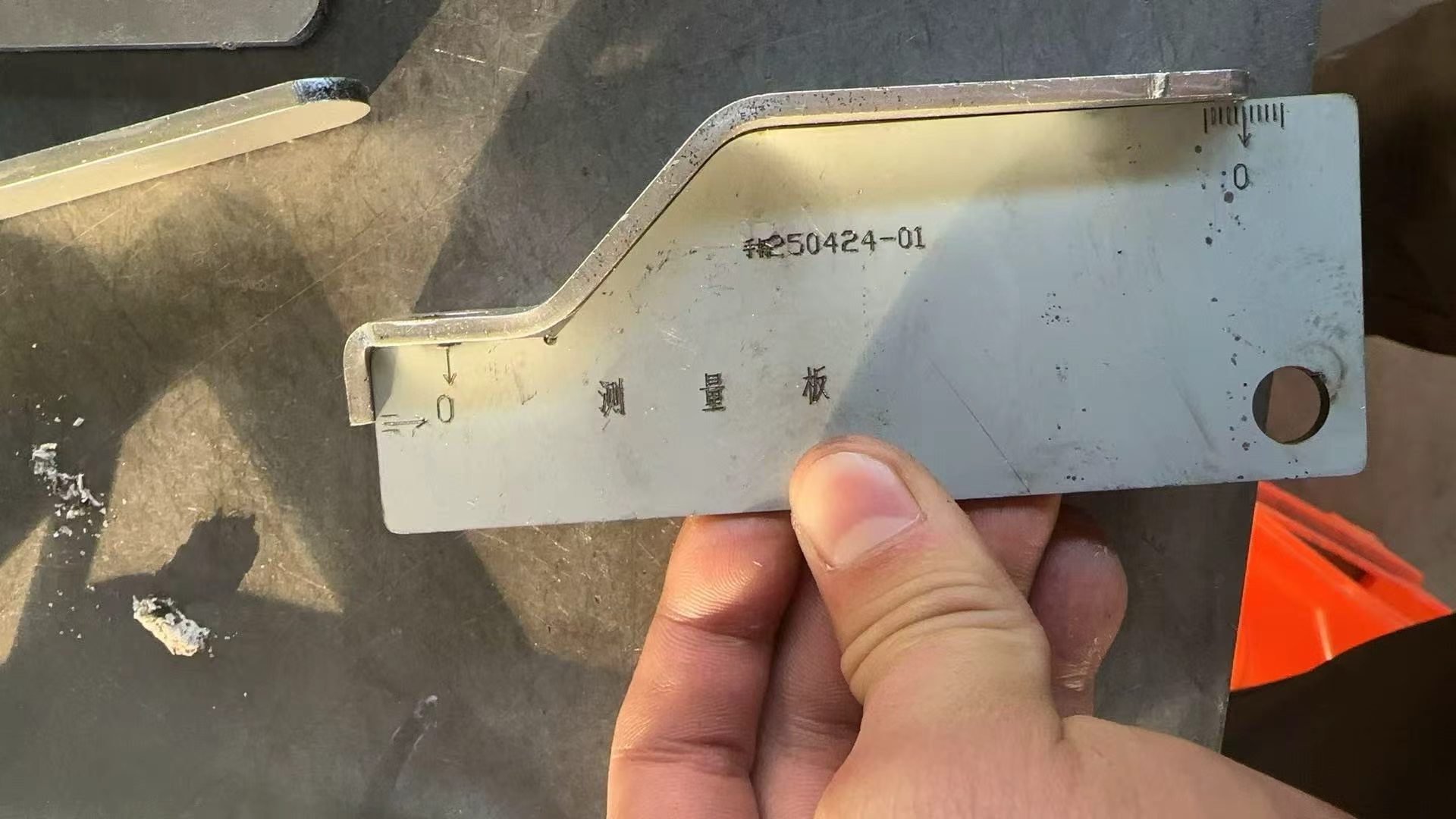
Each check plate is keyed to one specific drawing revision, which means a part produced under revision A is never accidentally checked against a plate made for revision B. When a customer releases a new revision, we either rework the plate or machine a new one before that revision enters production. This small detail eliminates the most common source of dimension disputes on repeat orders.
Once the geometry is confirmed, the part moves to a visual and surface inspection station. For powder-coated or zinc-plated handles we check coating thickness, edge coverage, color consistency, and the absence of drips or exposed base metal at the bend radius. For welded assemblies we look at weld penetration at the stem hole, spatter removal, and whether the handle pivots freely on its own mounting. Parts that fail any of these checks are quarantined and either reworked or scrapped — they are never mixed into the accepted pallets.
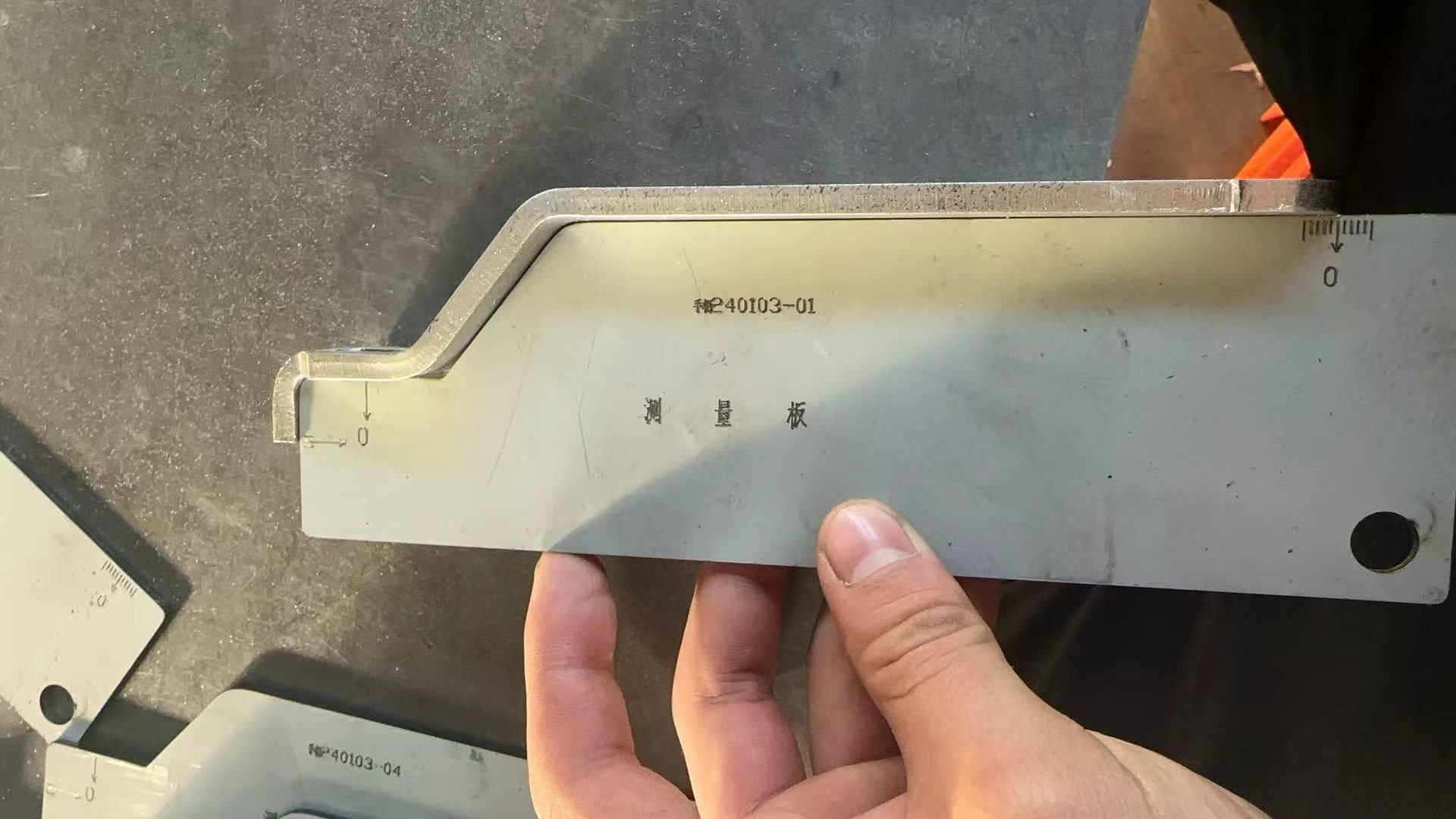
On a typical batch of 5,000 valve handles we measure the first piece, every 50th piece through the run, and the last piece before tooling changeover. Any deviation beyond ±0.2 mm on a critical dimension triggers a 100% re-check of the intervening pieces. We keep these inspection records together with the order file for at least three years, so if a customer ever raises a field question we can trace exactly which gauge, which inspector and which machine produced the shipment. This traceability is not a marketing claim — it is the reason our repeat-order complaint rate stays below 0.3%.
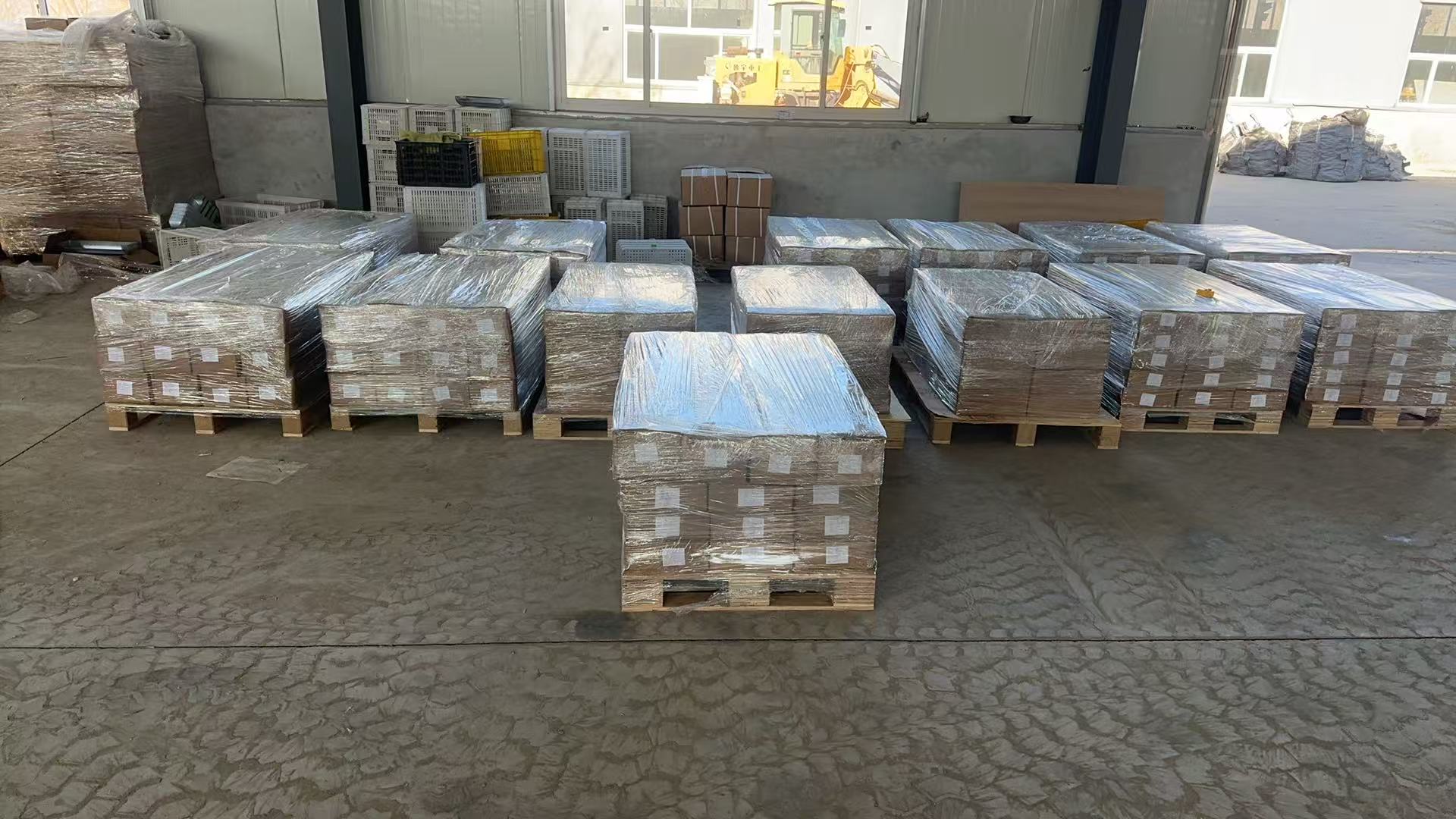
Accepted parts move straight to the packing area. Our standard export packing for valve handles is carton-on-pallet with 360-degree stretch film and green polyester strapping. The cartons are labeled on two adjacent faces so that identification remains legible even when the pallet is stacked two high. Wooden pallets are ISPM-15 heat-treated for export, and for especially fragile batches we add a fiberboard cap on top before the film is wrapped.
The purpose of this step is not paperwork — it is to survive a 12–18 sea voyage, multiple transshipments, and the occasional rough forklift handling at destination. We have found that a pallet that looks "over-packaged" in the factory yard almost always arrives exactly as it left, while a pallet that looked "just fine" in the yard arrives with crushed cartons and loose parts. The photos from our warehouse floor below show the staging rows waiting to be called to the loading bay.
On the day of dispatch, freight trucks pull up directly to our warehouse apron. A 3-ton HELI forklift places loaded pallets one by one, while two ground staff supervise weight distribution, door-side clearance, and strap tension. The red FAW J6L truck in the lead photo is rated for 18,000 kg gross, and this particular batch was stacked to two pallet levels, strapped across every layer, and sealed before the driver even left the yard. The blue cargo truck in the second photo shows the same operation at the moment the driver is closing and locking the rear door.
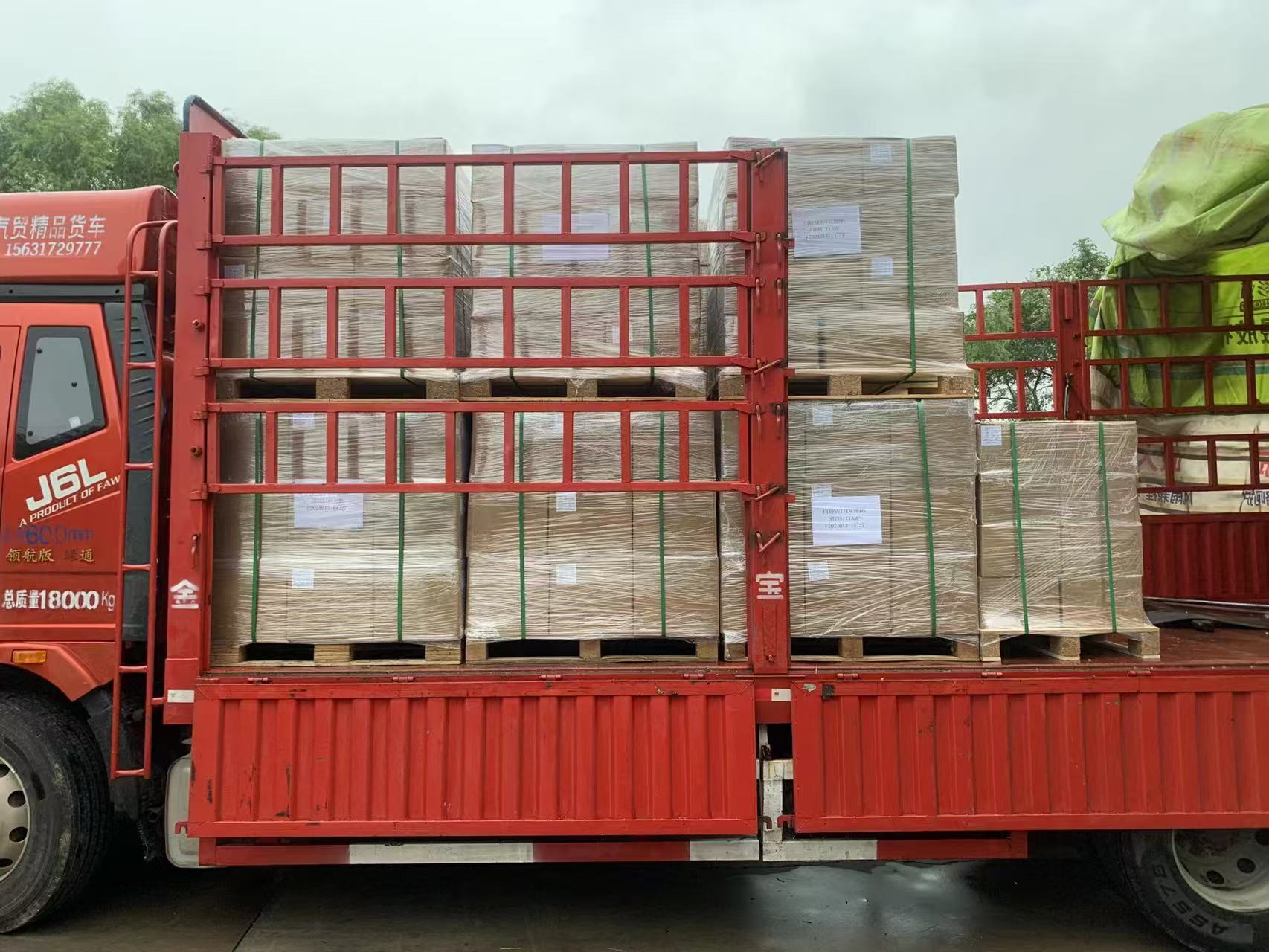
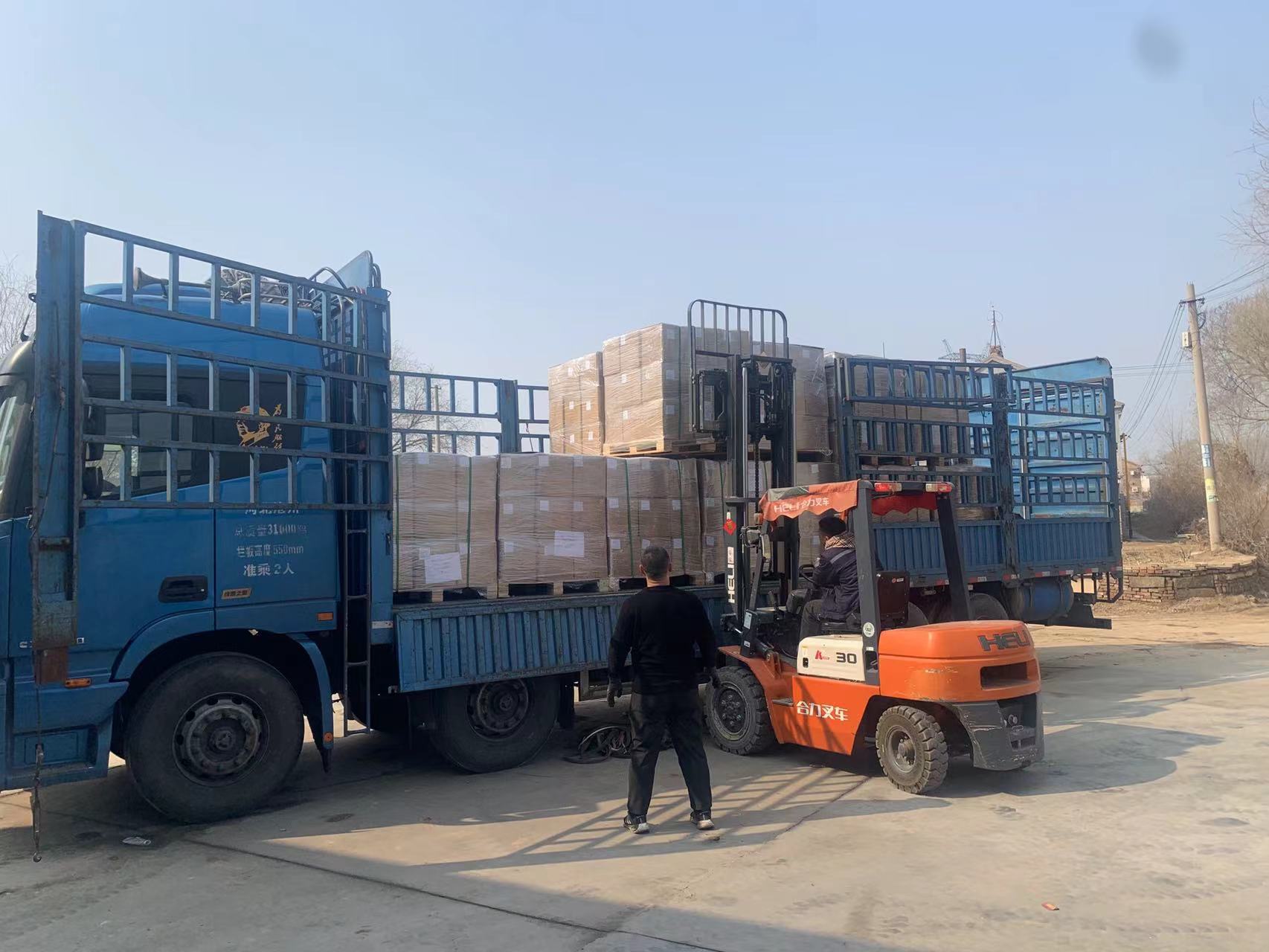
Why does this matter to an overseas buyer? Because the vast majority of "missing carton" or "water-damaged parts" claims are not factory errors at all — they happen during loading and transit. A double-strapped, shrink-wrapped, door-sealed truck reaches Qingdao Port, gets lifted onto the vessel, and the cargo lands at your depot in the same condition it left our apron. That is the whole point of spending time on packing and loading discipline.
Once the truck leaves our gate, we share the seal number, the trucking company's name and the estimated arrival time at Qingdao Qianwan Terminal with the buyer's forwarder. After the container is stuffed and the customs declaration is released, we send the buyer the container number, the booking number and the vessel name so they can track the shipment on Maersk, COSCO or MSC tracking pages themselves. We do not wait for the buyer to ask — this is part of our standard order-close procedure.
If you are comparing suppliers for valve handles or similar stamped hardware, we recommend asking these four questions during the RFQ stage:
"Do you use custom check gauges, and how are they tied to drawing revisions?" A supplier who has no gauge system is relying on hand measurement only.
"What is your first-article approval process?" You want photo or sample sign-off before mass production, not after.
"How are export pallets packed and strapped?" Stretch film + polyester strapping + heat-treated pallets is the minimum we consider acceptable.
"Can you share loading photos and the truck seal number before dispatch?" This is a small ask and a strong signal of a mature shipper.
QINGDAO ShengChenXiang Hardware Products Co., Ltd. is located at No. 378 Tuanjie Road, Huangdao District, Qingdao, China — roughly 40 minutes' drive from Qingdao Qianwan Container Terminal. Our current workshop covers 1,300 m², with an additional 1,500 m² expansion scheduled for completion by the end of 2026. We manufacture handles, clamps, hinges, supports, washers and non-standard custom hardware for valve, HVAC, automotive and enclosure customers across Europe, North America, Russia and Latin America. Our monthly output currently runs at around 80,000–120,000 finished pieces across all lines, and the new workshop will roughly double that capacity. If you have a drawing or a sample, send it to us via the contact page and we will come back with tooling feedback, a first-article sample plan, and a realistic delivery window.
Q: Can you inspect each piece, or only the first article?
A: We run first-article approval at the start of every batch, then random inspection at fixed intervals through the run. For critical orders we can move to 100% inspection at an agreed cost.
Q: How do you handle a rejected batch after loading?
A: We photograph, quarantine and count every rejected pallet before the truck leaves. Any replacement or air-freight back-up is agreed in writing before the vessel sails.
Q: What is your typical lead time for valve handles?
A: Repeat orders with existing tooling are typically 15–25 days after deposit; new tooling projects usually add 15–25 days for tool try-out and first-article approval.
Q: Can you ship by LCL or do you only handle full containers?
A: We regularly consolidate small valve handle orders into shared containers through our forwarder partners, so even buyers ordering 500–2,000 pieces can get a viable freight rate without waiting to fill a 40HQ.
Q: Do you provide material certificates or PPAP-style documentation?
A: For automotive and valve customers we supply mill test reports (EN 10204 3.1) on raw material batches, dimensional inspection reports per shipment, and photos of the loaded container. PPAP Level 3 can be quoted on request.
Need a reliable partner for your next valve handle or stamped hardware order? Browse our valve handle range or send your drawing through the inquiry form — we reply within one working day.

Welcomes Your Inquiry And Looks Forward To Working With You.
Add: No. 378, Tuanjie Road, Huangdao District, Qingdao City, Shandong Province, China
Email: qdscx@vip.qq.com
Tel: +86 18031716800
 English
 Русский
 Español
 Français
 Deutsch
 简体中文
 Árabe
 Português
 日本語
 한국어
 हिंदी
 Prancis
 Türkçe
 Tiếng Việt
 Italiano
 ไทย
